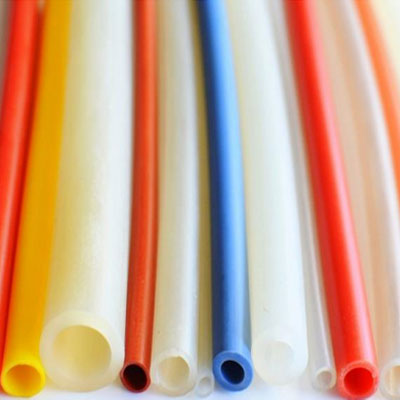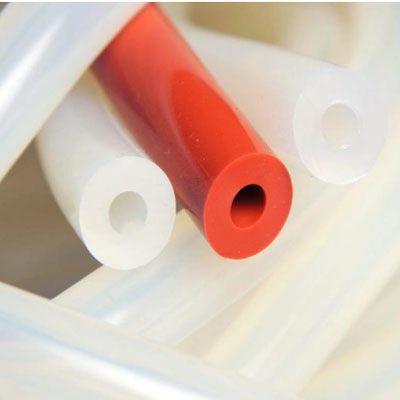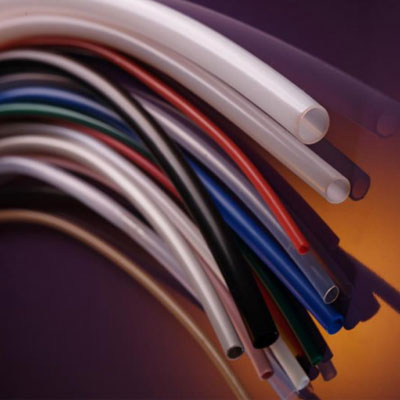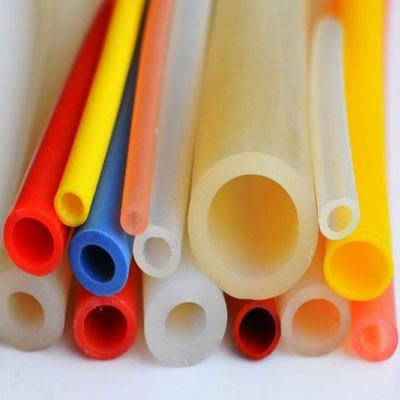
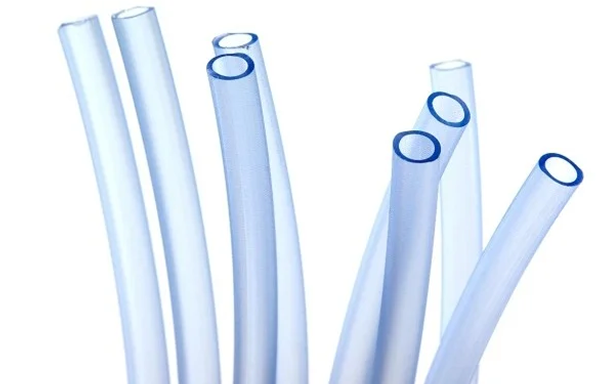
Platinum-cured silicone tubing is made by using a platinum-based catalyst to crosslink the silicone polymer chain. This process produces no byproduct, so the resulting silicone material is purer and has a clearer appearance. Platinum-cured silicone tubing typically has higher tear and tensile strength.
| Characteristic | Description / Specification |
|---|---|
| Transparency | Silicone tubing is highly transparent, allowing for easy visual inspection of fluid flow. |
| Biocompatibility | Silicone tubing is biologically inert and does not react with living tissue, making it ideal for medical applications. |
| Chemical Resistance | Silicone tubing is highly resistant to many chemicals, including acids, alkalis, and organic compounds. |
| Temperature Resistance | Silicone tubing can withstand a wide range of temperatures, from -45 °C to 200°C, without degrading. |
| Compliance with FDA21 CFR177.2600 | Silicone tubing is available in a wide range of sizes and configurations to meet specific application requirements. It can also be customized with various colors and markings for easy identification. |
Peroxide-cured silicone tubing is made by using a peroxide-based curing agent to crosslink the silicone polymer chains.
| Characteristic | Description / Specification |
|---|---|
| Flexibility | Silicone tubing is highly flexible and can be easily bent or shaped to fit various applications. |
| Temperature Resistance | Silicone tubing can withstand a wide range of temperatures, from -60 °C to 260°C, without degrading. |
| Chemical Resistance | Silicone tubing is highly resistant to many chemicals, including acids, alkalis, and organic compounds. |
| Appearance | Available in transparent to translucent varients. |
| Compliance with FDA21 CFR177.2600 | Certified compliance with FDA 21 CFR 177.2600 food contact and medical requirements. |
It is important to choose the right size and thickness to suit the specific application. Factors to consider include the flow rate, temperature and pressure requirement of the application, the chemical compatibility of the tubing with the substance it will come into contact with, and any regulatory requirements or industry standards that may apply.
The flow rate of tubing depends on several factors, including the inner diameter (ID) and length of the tubing, the viscosity of the fluid being pumped through the tubing and the applied pressure. The flow rate can be calculated using the Hagen-Poiseuille equation, which relates the flow rate to the pressure, viscosity, tube diameter and tube length. The equation is as follows:
* Note that the radius of the tubing is half the inner diameter (ID), so r = ID/2.
Factors such as fluid temperature, tubing material and tubing wall thickness can also affect the flow rate.
It is important to ensure that the flow rate is within the desired range for the specific application to ensure optimal performance and avoid any potential issues such as clogging or fluid backflow. The flow rate can be adjusted by changing the pressure or tubing diameter or by different tubing material with a different viscosity or inner diameter.